Insurance — General Technologies
General Technologies

Less paperwork. More progress.

Starting with dental claims. Applying the same workflow architecture to insurers, brokers and the people they serve.

Insurance is an information business. The information already exists — people just spend their days moving it by hand.

01 · The problem

The facts are already there. Someone still has to move them.

Claims, underwriting and policy servicing all come down to collecting the right information, understanding what it means and getting it to the right person.

01 · Read

It arrivesin every format.

Calls, emails, forms, photographs, clinical records. A person reads all of it before anything can happen.

02 · Re-key

Typed intothe next system.

The same facts are entered again, and again. Every repetition is a chance to introduce an error.

03 · Wait

Gaps surfaceweeks later.

What was missing becomes clear only when the insurer replies — long after anyone remembers the detail.

Automate the work around the decision. Leave the decision to people.

02 · Starting with dental

The record is written before the claim exists.

Practices submit information that already sits in the patient record. Staff still assemble the codes, treatment plan, radiographs and narrative by hand.

Our work in clinical documentation gives us the starting point: structured information from the appointment, ready to carry the insurance workflow forward.

Capture the information once. Review it once. Use it everywhere it is needed.
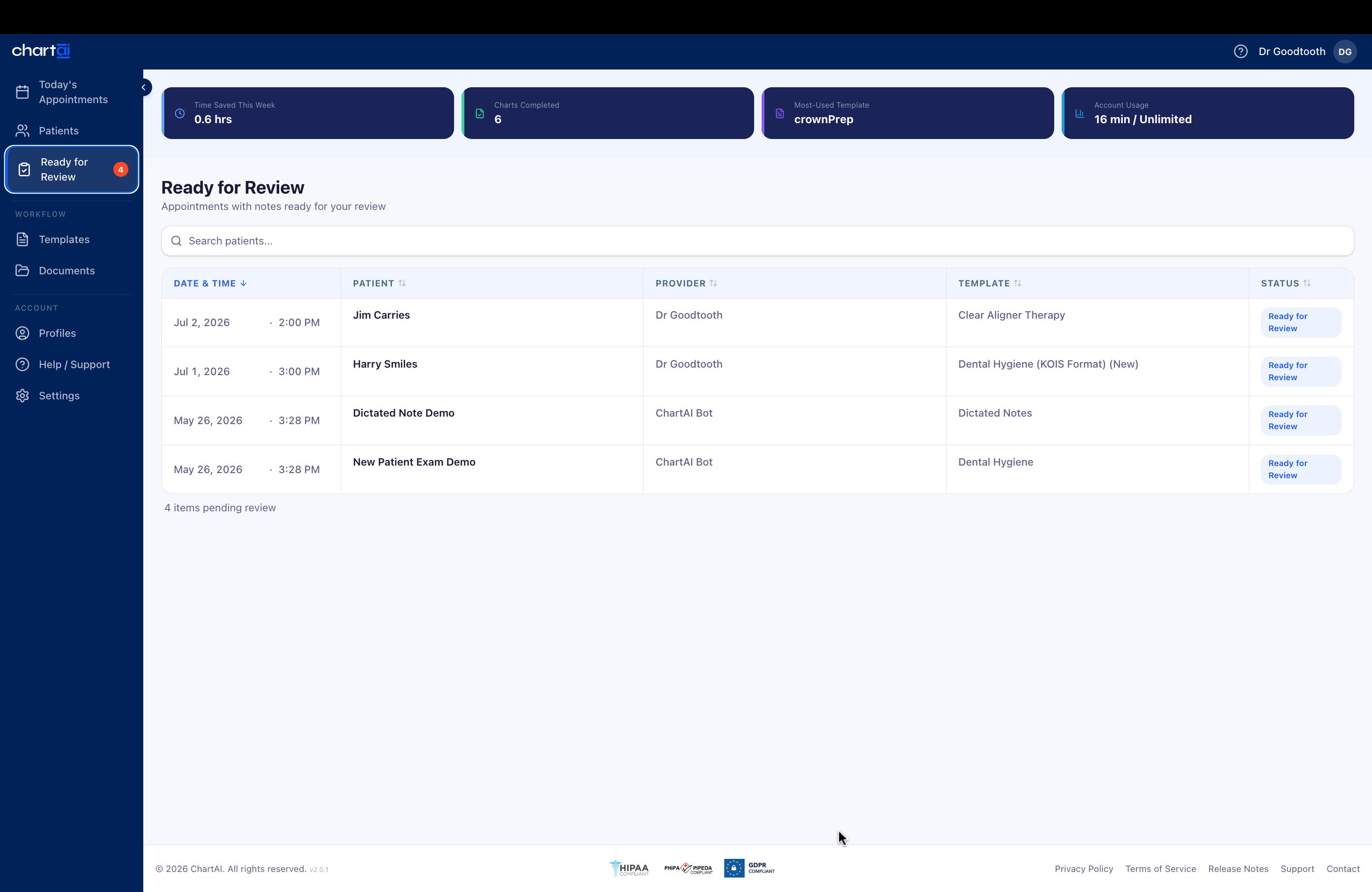
A review queue tracking outstanding submissions
Outstanding work, visible in one queue
03 · Appointment to claim

One appointment. A complete submission.

01

Verify coverage

Know what is available before the patient hears a number.

02

Assemble the file

Notes, codes, radiographs and narrative, gathered automatically.

03

Check before sending

Catch what is missing or inconsistent while the visit is still fresh.

04

Track the response

Follow submissions, organise replies and act on denials sooner.

04 · Enterprise application / illustrative workflow

A dental problem. An insurance opportunity.

A dental claim and a certificate of insurance look nothing alike. Step through them and the workflow is the same — identify the parties, retrieve the records, check the requirements, prepare the document, escalate the exceptions.

Workflow Dental practice Large insurance broker
Understand Identify the patient, treatment and purpose. Identify the client, certificate holder and request.
Retrieve Find clinical notes, coverage and images. Retrieve current policies and endorsements.
Check Flag missing narratives, codes or documents. Compare requested limits against what is in force.
Prepare Assemble a claim or preauthorization. Populate a certificate from verified records.
Approve Route to the right practice reviewer. Route unsupported wording to authorized staff.
Complete Submit and track the response. Deliver the certificate and record its approval.

Illustrative future application, not a statement of an existing Fortune 500 customer or live deployment. Adapting the architecture requires insurance-specific data models, integrations, rules and validation.

The documents change. The rules change. The operating model does not.

05 · Both sides

Everyone gets the same file. Nobody rebuilds it.

Practices

Less assembling. Less chasing.

Time back from building submissions, hunting documentation and answering avoidable requests.

Insurers

Complete files, consistently.

Fewer clarification cycles, and exceptions that reach the right reviewer sooner.

Patients

A number they can trust.

Clearer estimates, and fewer avoidable delays between diagnosis and treatment.

06 · Beyond dental

Same problem. Much larger market.

Across insurance, highly trained people spend their days reading documents, extracting facts, comparing requirements and moving work between systems.

Insurers

Claims intake

Turn calls, forms, photographs and documents into a structured claim file, and name what is still missing.

Insurers

Coverage checks

Surface the applicable policy language so reviewers can compare the event with the coverage and its limits.

Insurers

Consistency checks

Compare information across the file and raise omissions, conflicts or unusual patterns for review.

Brokers

Certificates

Prepare certificates from verified policy information, check the requested limits and route the exceptions.

Brokers

Renewals and changes

Gather updated information, prepare endorsements and track them through carrier approval.

Brokers

Client requests

Organise what arrives by email and phone, match it to the right client and policy, and prepare the next step.

A large broker may handle certificate requests across thousands of clients, policies and projects. Each one is routine. The volume is not.

07 · Authority

Automate the preparation. Never the decision.

Insurance decisions carry financial and legal consequence, so the technology’s authority has to be explicit. Extracting a fact, flagging an inconsistency, drafting a document and approving an outcome are four different things.

01 · Extract

Read the file

No authority required.

02 · Flag

Name the gap

A missing document request can be drafted.

03 · Prepare

Build it for review

A claim or certificate, ready to approve.

04 · Approve

Reserved for people

Underwriting, coverage and settlement stay with the professional.

08 · The future

Administration that runs quietly in the background.

Information captured when it appears. Requirements identified early. Documents prepared without being asked. Exceptions routed to the people qualified to resolve them.

We begin with dental claims. The opportunity is insurance.

Talk to us → Explore ChartAI